Skip to content

Why Water?

Water creates a unique environment for rehabilitation and exercise.

Buoyancy can reduce the amount of weight placed on the body while water resistance creates an opportunity for controlled strengthening and movement.

Depending on the patient and rehabilitation goals, aquatic therapy may be incorporated to support mobility, conditioning, range of motion, strength and movement.

Which Is Better?

Pool and Underwater Treadmill

Neither is automatically better. Some pets may benefit from therapeutic swimming, others from underwater treadmill work, and some programs may use both. The rehabilitation veterinarian chooses based on the pet’s condition, abilities, comfort, and goals.

Indoor Heated Therapy Pool

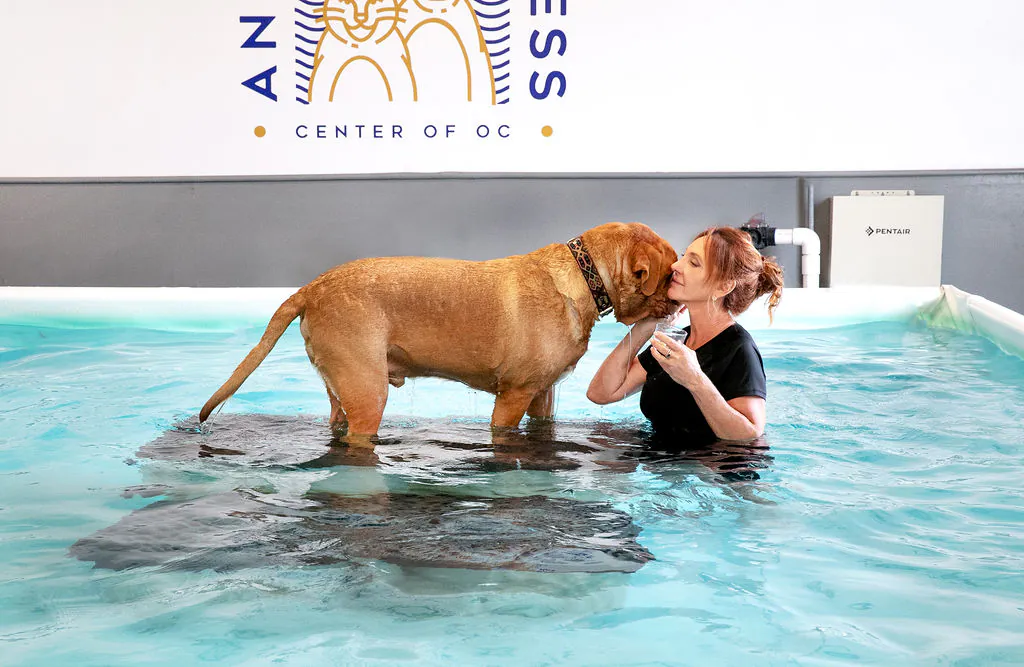
Our indoor heated therapy pool allows patients to experience movement in a buoyant environment while working directly with a trained AWCOC team member.

Therapeutic swimming may be incorporated into rehabilitation or conditioning programs when appropriate.

The pool also gives our team the opportunity to provide hands-on assistance with positioning and movement while adapting each session to the patient's comfort and abilities.

Underwater Treadmill

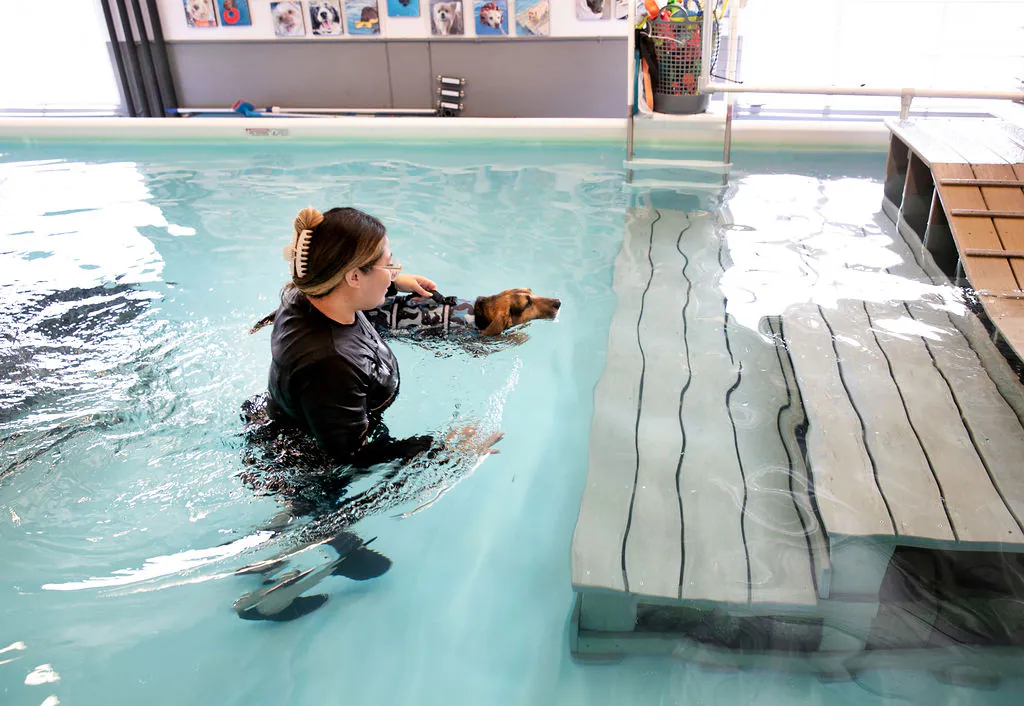
Our underwater treadmill combines controlled walking with the properties of water.

The water level, movement, and level of assistance can be adapted to the individual patient, giving our team an opportunity to work on gait, limb placement, weight shifting and controlled movement.

For some patients, the underwater treadmill can be an important bridge between assisted exercise and more independent movement on land.

Common Rehabilitation Needs

Conditions Hydrotherapy May Help Support

Aquatic rehabilitation may be considered for pets experiencing:

Arthritis and senior mobility challenges

Buoyancy may let some senior pets, and pets living with arthritis, exercise with less weight on their joints while water resistance supports gentle strengthening.

Cruciate injury and TPLO recovery

When medically appropriate, aquatic work may support controlled movement and progressive strengthening after a cruciate injury or TPLO surgery.

Post-orthopedic surgery recovery

After orthopedic surgery, hydrotherapy may be used to support a gradual return of strength, range of motion, and comfortable movement.

Hip and elbow dysplasia

The water may allow pets with hip or elbow dysplasia to move with reduced weight bearing while still working on strength and mobility.

IVDD and neurologic conditions

For some pets with IVDD or other neurologic conditions, water may support balance, coordination, and assisted movement.

Degenerative myelopathy

Hydrotherapy may be included to help maintain strength, coordination, and mobility as degenerative myelopathy progresses.

1U6A9705_edit
Dog in the indoor heated therapy pool at Animal Wellness Center of OC in Costa Mesa
1U6A9566_edit
1U6A9459_edit
1U6A9467_edit
image 5

FCE

After a fibrocartilaginous embolism, aquatic exercise may support pets working to regain strength, coordination, and functional movement.

Weakness and gait abnormalities

Hands-on support in the water may help pets with weakness or gait changes practice limb placement, balance, and steadier movement.

Amputation and tripod mobility

Swimming or underwater treadmill work may help pets adapt their balance, strength, and weight distribution after an amputation.

Weight management

Aquatic exercise may be one part of a weight-management plan, offering activity with less load on the joints.

General conditioning

For appropriate pets, hydrotherapy may support endurance, muscle use, and overall conditioning.

Your pet's hydrotherapy session

What Happens During a Hydrotherapy Session?

01

Tailored

Your pet's experience is tailored to their individual abilities and goals.

02

Hands-On

Our trained team members remain actively involved throughout the session. Depending on the patient, we may assist with positioning, gait patterning, limb placement, balance, weight shifting, and movement.

03

Comfort

We also pay attention to something just as important: how your pet feels about the experience.

Our goal is to create a calm, supportive environment where your pet can work at an appropriate pace.

Hydrotherapy FAQs

What's the difference between swimming and an underwater treadmill?

Swimming provides a highly buoyant aquatic environment, while an underwater treadmill allows controlled walking with varying levels of water support. Each can serve different rehabilitation and conditioning goals.

Do you get into the pool with my dog?

Our trained team members work directly with patients in the water when providing therapeutic swimming and aquatic rehabilitation.

Can senior dogs use hydrotherapy?

Hydrotherapy may be appropriate for some senior dogs because the aquatic environment can allow exercise with reduced weight bearing. Each patient should be evaluated individually.

Can hydrotherapy help after TPLO surgery?

Aquatic rehabilitation may be incorporated into a post-operative rehabilitation program when medically appropriate and at the appropriate stage of recovery.

Does my dog need to know how to swim?

Not necessarily. Therapeutic swimming is supervised and supported by trained team members, and we determine whether pool therapy is appropriate for each individual dog.

Discover a Different Kind of Hydrotherapy

Indoor heated pool. Underwater treadmill. Personalized, hands-on care.

Talk to Us About Hydrotherapy